Monday, 27 June 2016

Cocoa Bean Growing Information


Cocoa is also called as "cacao" (derives from the Spanish word cacao) and this is mainly grown for its bean from which cocoa solids and cocoa butter are extracted. Cocoa beans are mainly used in the production of chocolate, cocoa powder and cocoa butter whereas cocoa butter is also used in the cosmetic industry. Cocoa is an important commercial bean crop from humid tropics. In India, this crop is grown as mixed crop in suitable regions. Kerala state of south India tops the production of cocoa beans in Indian continent. Ivory Coast is top producer of cocoa beans in the world. Usually, cocoa is grown as mixed crop in areca-nut, coconut and oil palm gardens. The cocoa bean plant is a native to Amazon basin and tropical regions of South America and Central America. Commercial cultivation of cocoa beans is very much successful due to its   demand in local and international markets. One can expect decent profits in cocoa bean farming with proper orchard management practices. The botanical name or scientific name of cocoa tree is “Theobroma cacao. L.”. Cocoa tree belongs to the genus of” Theobroma”. In India, cocoa plantation is usually seen in the state of Kerala, Tamil Nadu, and Karnataka. Cocoa beans are cultivated in smaller extents in some states only when compared to other countries Read more about the crop here.

Tuesday, 10 May 2016

Hydroponics Green Fodder Cultivation

Hydroponics Green Fodder Guide:


Green fodder is one of the important inputs and plays major role in feed of milch animals. Green fodder provides required nutrients/mineral for milk production and health of the dairy animals or livestock. Control of feed cost in dairy animals impacts the profits and result in successful dairy farming. Generally, in most of Indian states, the feed cost is about 70 to 75% of total milk cost where in green fodder contributes 30 to 35% of total input feed. In India, rapid urbanisation and mining areas has caused shrinkage of grazing areas and availability of lands that produces green fodder. This situation caused the dairy owners to look for alternative and sustainable method of quality green fodder production. Due to high labour costs, non-availability of irrigated lands and high land prices made the dairy business to face many challenges to meet the growing milk demand in the country. It is very clear that with increasing costs and depleting natural resources, sustainable technology like 'Hydroponics' would be the key driver of the dairy industry future. Using hydroponic technology to produce the quality green fodder would be a revolutionary step in country’s green fodder production. Having limited irrigation facility is also forces to implement the hydroponic technology in production of green fodder. Greenhouse / Polyhouse would be the right choice for implementing the hydroponic technology. Many states in India are providing subsidies on building polyhouse and greenhouses. One can avail these subsidies on greenhouse or polyhouse to implement the hydroponic technology in production of quality green fodder. Hydroponically grown fodder can be fed to sheep, goat, cattle and other livestock animals. Read more here.

Saturday, 30 April 2016

Castor Seed Cultivation Information


Castor (Ricinus communis L.) is grown for its seeds. The oil extracted from Castor seed is being used widely for various purposes. It is used as a lubricant in high-speed engines and aero planes, in the manufacture of soaps, transparent paper, printing-inks, varnishes, linoleum and plasticizers. Castor seeds are also being used for medicinal and lighting purposes. The Castor may be used to make manure and plant stalks as fuel or as thatching material or for preparing paper-pulp. Castor leaves are being fed to silkworms. Castor belongs to the family of “Euphorbiaceae and genus of "Ricinus L.". Castor is indigenous to the Eastern Africa, southeastern Mediterranean Basin and India, but is grown throughout tropical regions and sub-tropical regions of the world. Castor seeds contain between 45 % and 60 % of oil that is rich in triglycerides, mainly ricinolein. Commercial growing of Castor seeds is very much successful due to its demand in local and international markets. In India, this crop is grown where annual rainfall is expected below the national average and the soil is not that fertile. Read more here.

Saturday, 9 April 2016

Tulip Flower Growing Guide


Tulips are very famous ornamental bulbous flowers grown due to their attractiveness. There are many improved varieties (cultivars) developed in this bulb growing industry. Tulip cultivation is limited in India. However, Himachal Pradesh and hilly areas of Jammu and Kashmir are perfect for Tulip cultivation. Most tulips thrive in colder winters because of the long chilling requirement for bulbs. Tulips can be grown in pots, containers, prepared beds, borders, basins of other orchards like apples, cherry, etc...Tulips can be grown in greenhouse, polyhouse and shade net as well. Tulip plant belongs to the family of "Liliaceae" and genus of "Tulipa L.".

Actually, Tulips are spring-blooming perennials that grow from bulbs. Depending on the species (variety), tulip plants can be between 10 cm and 70 cm high. When it comes to flower, it is usually shaped like a cup or egg with 6 petals. The tulip flower petals are available from single colour to multi-colours with different patterns depending on the variety or species. The Tulip flowers come in many colours like orange, pink, cherry, magenta, salmon, crimson, purple, apricot, lilac, mauve, blue, yellow, apricot, violet, terracotta, red, scarlet, chocolate, brown along with many shades. Tulip is the most popular garden flower due to its appearance and  is used in decoration of various parties. Read more here.

Monday, 28 March 2016

Safflower Growing Info Guide

 http://agrifarming.in/safflower-cultivation

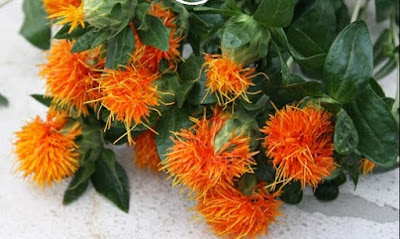
Safflower (kusum, kusumbha, kardi) is one of the oldest cultivated  annual oilseed crops which are well adapted to dry regions. The safflower seed also used to produce oil. Safflower is a thistle-like plant with a central branch stem, a varying number of branches and a tap-root system. Each branch has 1 to 5 yellow or orange flowers and contains 15 to 20 seeds. This crop seed contains about 30 to 40 % oil. In India, This safflower oil (golden yellow coloured) is largely used for cooking purposes. The main benefit of this seed is to produce cake after oil extraction which is being used as cattle feed. The green safflower crop can also be used as a green fodder for cattle and the livestock. When it comes to nativity of safflower, it is believed that safflower is native to Arabia region. However, this crop is grown most of the other parts of the world as well.  India ranks first in the world with respect to acreage accounting for about 35 % of the world total production of safflower. Maharashtra and Karnataka states are major producers this crop in India. Safflower belongs to the family of "Asteraceae" and genus of "Carthamus". The botanical name or scientific name of safflower is "Carthamus tinctorius L." Read more here.

Friday, 18 March 2016

Vanilla Cultivation Guide

Vanilla is a tropical climbing vine of the orchid family, grown for its pleasant flavour. Vanilla is one of the costliest spices in the market after saffron and grows with the support of bark of trees. There are than 40 species of vanilla exist. However, only three of them are considered as important ones.  Vanilla planifolia Andrews is the variety widely cultivated on large scale. This cultivar (variety) has more commercial value for its vanillin. Vanilla vine is a perennial in nature which belongs to the family of "Orchidaceae" and genus of "Vanilla". Madagascar is the top producer of vanilla in the world. Usually, Vanilla plants start the first yield after 3 years of planting and continue to give the yield up to 12 to 14 years. Generally, vanilla crop is grown as an intercrop in the fields of ‘coconut’ and ‘areca nut’. As India is concerned, Indian exports of vanilla multiplied rapidly and accounted for approximately 2% of world vanilla exports. In India, Karnataka tops the country's vanilla cultivation followed by Kerala and Tamil Nadu states. The vanilla vines can be grown in indoors, greenhouse even in pots and containers. The initial investment for the cultivation of vanilla is little when compared to other spices. Vanilla also can be grown hydroponically. Continue Reading Here.

Friday, 11 March 2016

Jatropha Farming Guide


Jatropha curcas is one of the best oil seed plants and identified as most suitable oil seed bearing plant due to its various favourable attributes. Jatropha is a deciduous large shrub or small tree that can reach up to 5 meters in height with smooth gray bark. Jatropha plants are native to Central America and well-adapted to the tropics and subtropics of the world. Jatropha is a hard plant and it has short gestation period when compared to other oil seed crops. The other advantage of the plant is it has wider adaptability of different climatic conditions and can be grown in most of the areas. The other reason to go for the cultivation of Jatropha is; it produces high quality oil and oil recovery is very high. Cultivation of Jatropha appears viable due to its demand. Basically, Jatropha crop meant for wastelands and less productive lands, hence this crop will not replace other important food crops grown in rich soils. Jatropha plants produce oil seeds as a source of energy in the form of biodiesel. Jatropha plants belong to the family of “Euphorbiaceae” and genus of “Jatropha L.”. For More Information click here.